PDF
40 pp.
Studies, policy papers, and training manuals emerging from our field programs and projects across governorates.

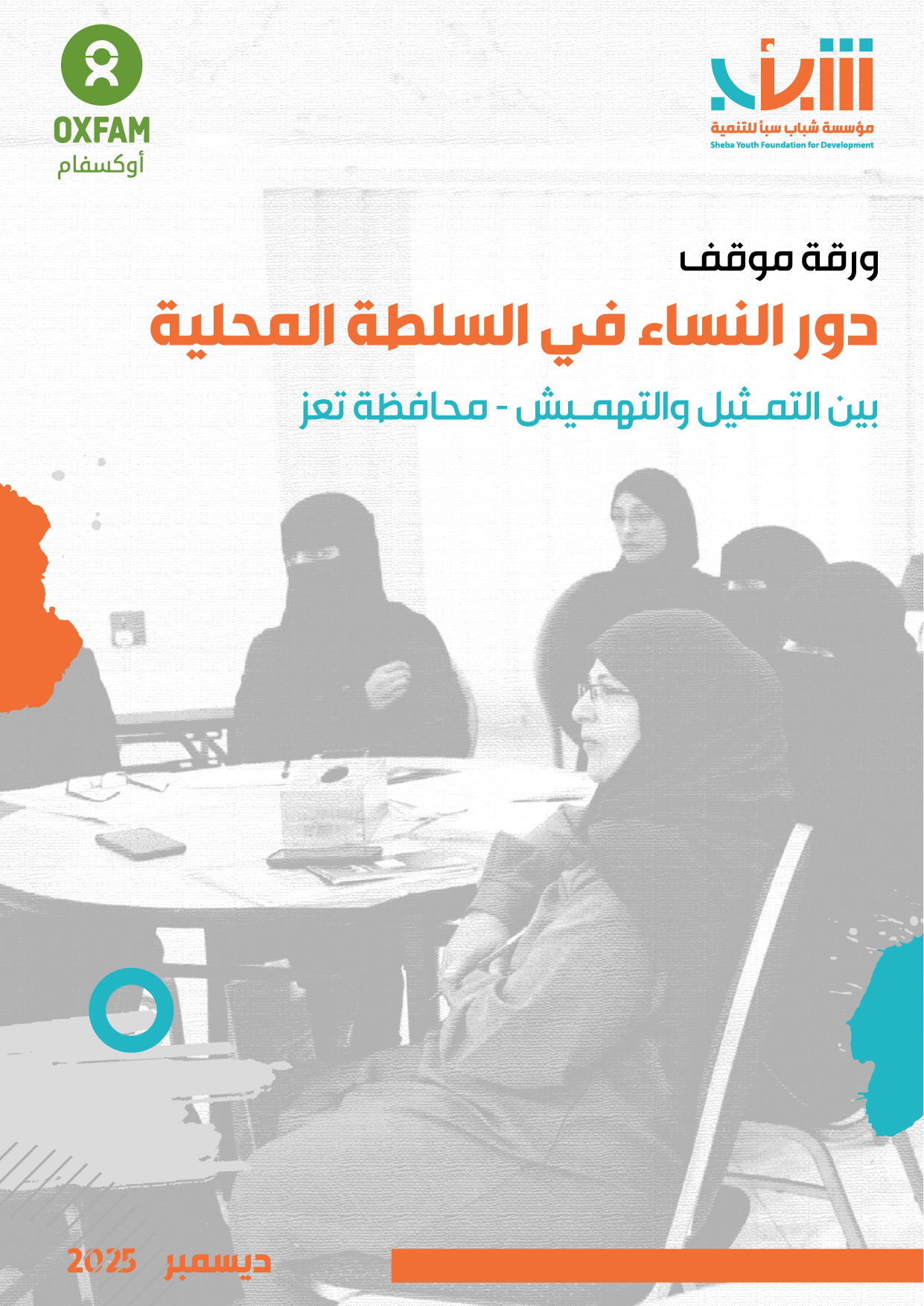
Between June and August 2023, Sheba Youth Foundation for Development conducted a research study on the dynamics of gender power and women’s participation, with funding from Oxfam. The study aimed to gather information on the needs and risks faced by women and girls, generate findings, and develop practical, actionable recommendations to inform more gender-responsive programming and strengthen interventions that enhance the resilience of vulnerable displaced people and conflict- and disaster-affected host communities in the targeted areas. It also sought to improve women’s participation in decision-making processes related to peace and security. The study covered rural and urban areas across five districts of Taiz Governorate: Al-Shamayatayn, Al-Ma’afer, Al-Mudhaffar, Al-Qahirah, and Salh. Its scope included an assessment of gender roles, relationships, and dynamics; capacities and vulnerabilities; protection; community governance; conflict resolution; participation; and access to services and assistance. The study’s sampling framework covered a broad range of conflict- and disaster-affected stakeholders, with a particular focus on the most vulnerable groups. A sample of 250 people was drawn from the target population, including marginalized communities and host communities living in rural, peri-urban, and urban areas across Taiz Governorate. A total of 196 interviews were conducted for data collection, comprising 85 in-depth interviews with men and women from vulnerable households, including internally displaced persons (IDPs), host communities, marginalized groups, and households with persons with disabilities; 105 interviews with key informants, including male and female community leaders and local authorities; and six focus group discussions involving 20 men and 40 women.
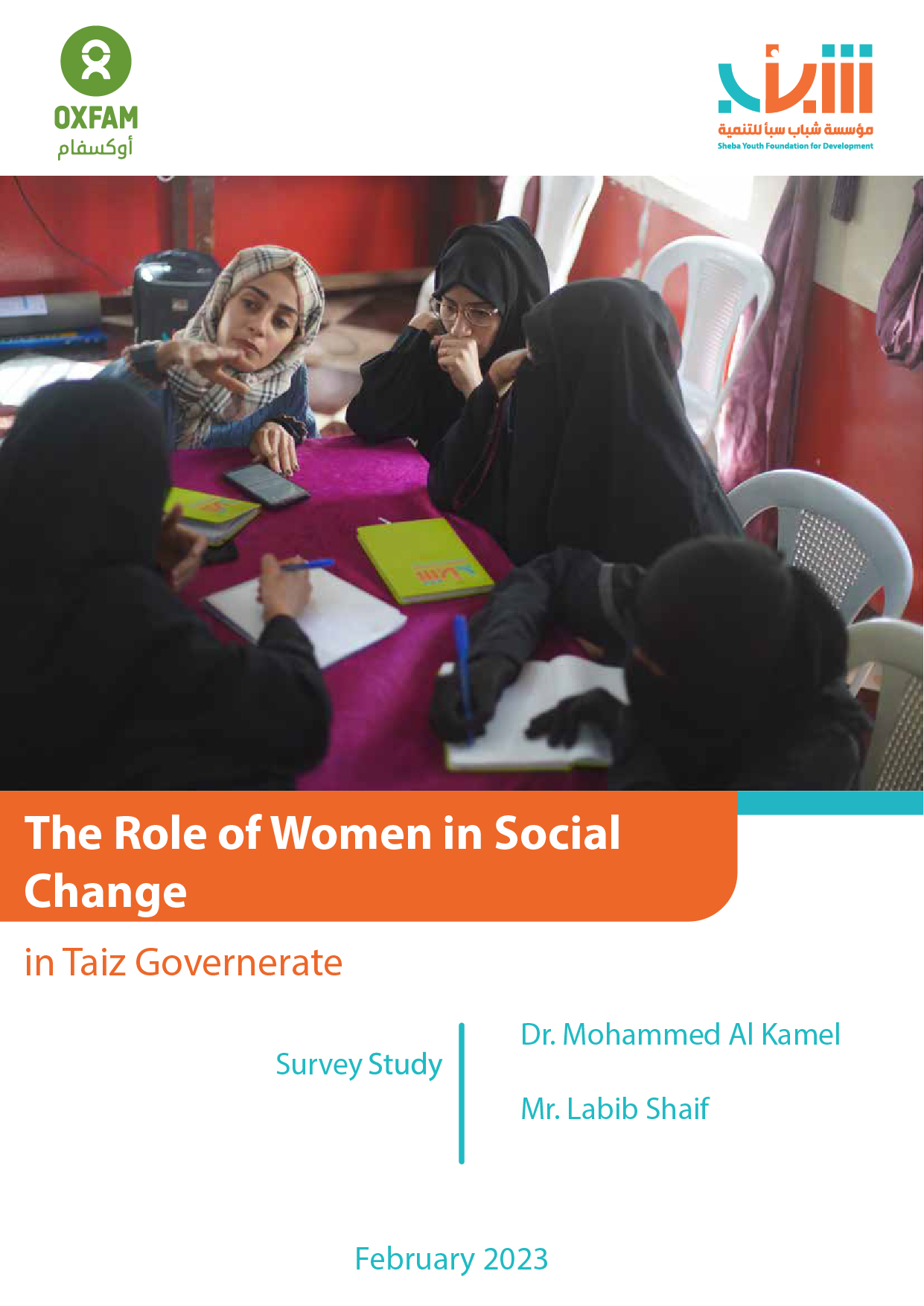
Since 2011, Yemen has passed through crises and a long conflict and through the 2015 war until present, the Yemeni society, in various governorates in general and in Taiz governorate in particular, witnessed many changes that led to negative effects on the life of society. Amidst this situation, many actors played important roles to reduce the effects of the deteriorating social situation by contributing to social change, and among these actors were women leaders. Thus, this study aimed to address the role of women in social change in Taiz governorate at the rural and urban levels, and within this framework it sought to reveal the most prominent achievements of women in social change, and to identify the challenges and difficulties that facing them. The study showed that women leaders in civil society in Taiz governorate have effective roles in social change and tangible contributions to mitigating the repercussions of the ongoing war on society. Women’s efforts focused in the relief and humanitarian field, followed by the health field, then education, then the development field (roads, water and eco nomic empowerment of families), then the cultural and awareness field, the community field and local mediation, and finally the legal, security and peace building field. The efforts of those leaders have gained the respect and trust of society, and were supported by various social, subjective and objective factors, most notably: women’s self-confidence and desire for change, family support and encouragement, the cultural and educational level of women, war conditions and the cessation of services that acted as a motivating challenge for women, increase of society’s awareness of the importance of the role of women In these circumstances, women›s abilities for dialogue and community communication, support of the local authority and civil society, all of which are factors that contributed to achieving tangible successes in the experiences that women went through, and on the other hand, those leaders faced obstacles and difficulties that sometimes limited their contribution and doubled their suffering in the field, foremost of which are social disincentive factors due to the culture of society, and another is subjective due to field experience, capabilities and skills, a third is due to the security situation, and a fourth is due to the weak role of civil society and the local authority in supporting women›s efforts.
The roles of local civil society organizations working in peacebuilding in Taiz Governorate and Yemen more broadly have been largely shaped by the humanitarian context, as these organizations have sought to fill the vacuum created by the collapse of local institutions. This has also been influenced by donors allocating the majority of their support to emergency humanitarian response. Despite these circumstances, local civil society organizations have sought to adapt their approaches and activities by increasingly focusing on and transitioning toward work across Yemen’s three peace tracks. Youth- and women-led civil society organizations have played active roles in peacebuilding, particularly across Tracks II and III. Their efforts have included activities related to prisoner exchanges, reopening access routes, restoring services, resolving community conflicts, and raising public awareness on peacebuilding. Through these substantive and tangible interventions at the community level, they have succeeded in gaining the trust of various parties, local communities, and donors. Several factors have supported the efforts of these organizations, most notably their approaches to implementation, the experience they have accumulated, the trust placed in their efforts by communities, donors, and conflict parties, as well as networking and joint action. At the same time, these organizations have faced numerous obstacles that have constrained their role across the peace tracks, particularly Tracks II and III. Key challenges include limited donor support and insufficient understanding of the nature of their work under the prevailing circumstances; weak organizational capacity for networking; institutional shortcomings; limited availability and experience of qualified peacebuilding personnel; security-related concerns; attempts to undermine or question their efforts; and accusations of bias, among other constraints that have limited their ability to fulfill their peacebuilding roles.