Download PDF
Download PDF CopyThe Role of Women in Social Change
About the Publication
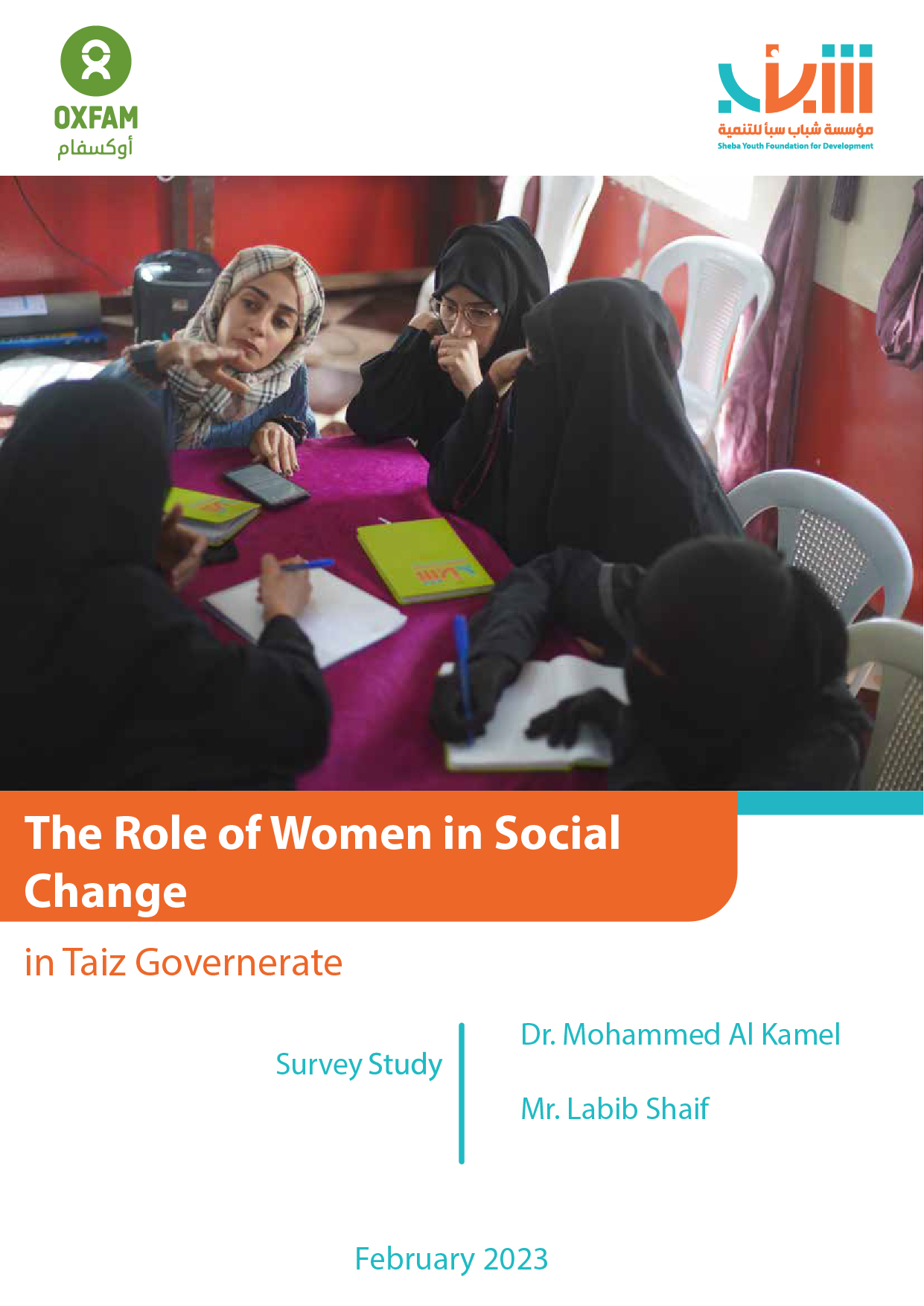
Since 2011, Yemen has passed through crises and a long conflict and through the 2015 war until present, the Yemeni society, in various governorates in general and in Taiz governorate in particular, witnessed many changes that led to negative effects on the life of society. Amidst this situation, many actors played important roles to reduce the effects of the deteriorating social situation by contributing to social change, and among these actors were women leaders. Thus, this study aimed to address the role of women in social change in Taiz governorate at the rural and urban levels, and within this framework it sought to reveal the most prominent achievements of women in social change, and to identify the challenges and difficulties that facing them. The study showed that women leaders in civil society in Taiz governorate have effective roles in social change and tangible contributions to mitigating the repercussions of the ongoing war on society. Women’s efforts focused in the relief and humanitarian field, followed by the health field, then education, then the development field (roads, water and eco nomic empowerment of families), then the cultural and awareness field, the community field and local mediation, and finally the legal, security and peace building field. The efforts of those leaders have gained the respect and trust of society, and were supported by various social, subjective and objective factors, most notably: women’s self-confidence and desire for change, family support and encouragement, the cultural and educational level of women, war conditions and the cessation of services that acted as a motivating challenge for women, increase of society’s awareness of the importance of the role of women In these circumstances, women›s abilities for dialogue and community communication, support of the local authority and civil society, all of which are factors that contributed to achieving tangible successes in the experiences that women went through, and on the other hand, those leaders faced obstacles and difficulties that sometimes limited their contribution and doubled their suffering in the field, foremost of which are social disincentive factors due to the culture of society, and another is subjective due to field experience, capabilities and skills, a third is due to the security situation, and a fourth is due to the weak role of civil society and the local authority in supporting women›s efforts.